
History of Australian construction and common building pathologies
by Joao Franco | April 2, 2026
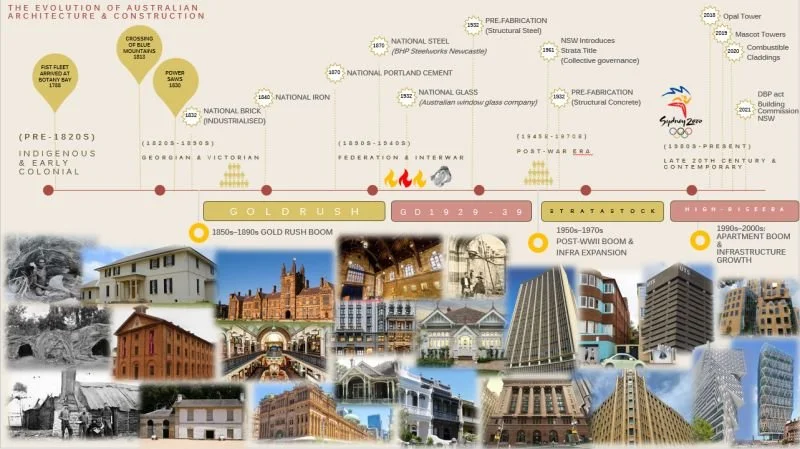
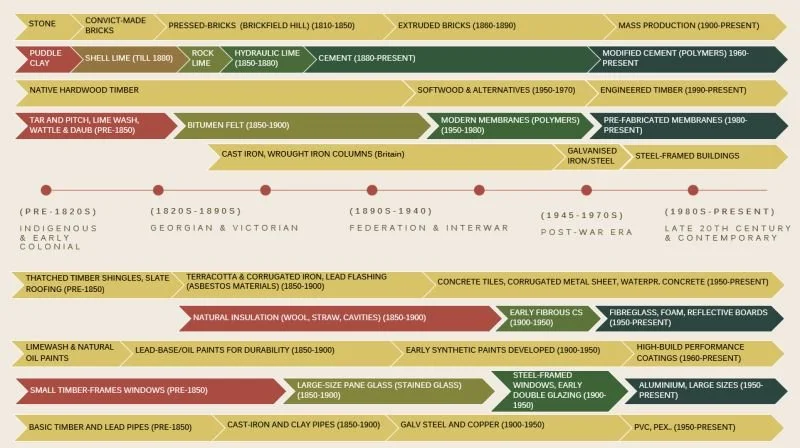
Australia’s built environment reflects more than changing materials and methods; it reflects the economics, labour force, migrant contribution, regulations and construction knowledge of each era.
Many of the defects we see today are not random. They are often the natural result of how buildings were conceived, detailed and built within the standards and constraints of their time. As Donald Friedman put it, “assume the people who built it were at least as smart as you. They had good reasons for doing what they did, just like you do..”
Maybe that is why judging an old building detail only by today’s standards can miss the point. It is a bit like mocking a slide rule for not being a calculator. What problem was it trying to solve, and does it still solve it well enough? In asking that, old buildings can still teach us a lot. Technology changes, but physics does not.
From wattle and daub, mass masonry and early concrete to cavity walls, brick veneer, curtain walls and lightweight systems, each generation of construction seems to find its own way into trouble. Look closely, and the pattern starts to repeat: inadequate water shedding, restrained movement, vapour entrapment, loss of breathability, salt attack, corrosion, water ingress through weak interfaces, deferred maintenance, and progressive durability loss where materials, detailing and exposure stop working together. The systems change, but the underlying principles keep showing up through different failures.
Perhaps that is why construction history matters. Not as nostalgia, but as a way of seeing more clearly. And maybe better repair decisions begin there..
Old structures hold a special place in our hearts, and we enjoy helping clients make sense of existing buildings, their defects and the repairs they genuinely need. If we can assist, feel free to contact the Ironbridge Engineering team.