
Understanding AAMA 501.2 Water Testing for Building Facades
by Azel Mosquetes | May 12, 2026
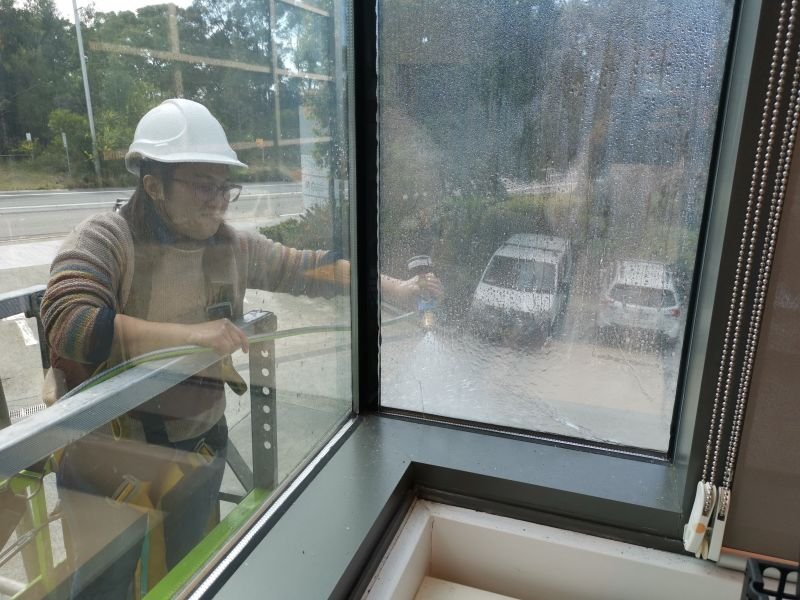
AAMA water testing is a vital verification step in ensuring facades perform as intended under real environmental conditions. By applying controlled water and air pressure to targeted areas, such as curtain walls, external doors, windows, and their junctions with adjacent facade systems, this methodology confirms the integrity of drainage, sealant continuity, and pressure management once installed on site.
In Australia, AAMA 501.2 water testing is increasingly recognised as a reliable and practical method for verifying facade performance in situ. It identifies potential leakage paths under specific water pressure while accounting for real installation variables such as workmanship, interface detailing, and sequencing, factors that critically influence long-term facade durability. In practice, incorporating AAMA 501.2 testing into project quality assurance plans reflects a proactive, risk-based approach. It allows early detection of defects at critical interfaces, particularly where curtain walls meet adjoining facade elements, before they develop into costly remediation issues. As pressure-managed facade systems become more prevalent, this targeted testing methodology supports industry best practice, ensuring both design intent and construction execution are effectively validated on site. In practice, AS 2047 provides the product-level benchmark for water penetration resistance in windows and glazed doors, while AAMA 501.2 adds a field check of the installed joints, sealants, and interfaces on site.
Together, they offer a practical framework for weatherproofing assessment by linking product testing with facade-level verification. This helps bridge the gap between laboratory results and real in-service conditions, particularly where wind-driven rain and repeated pressure cycling can expose leakage paths that static testing may not reveal.
If you need support with precision testing or facade validation for your next project, please reach out to the Ironbridge Engineering team.