
Access for Building Inspections: Choosing the Right Approach
by Aaron Skeates-Udy | May 19, 2026
Building inspections are simple until access constraints appear. The real skill lies in matching access methods to the client’s compliance culture, ensuring safety, without inflating cost or risk.
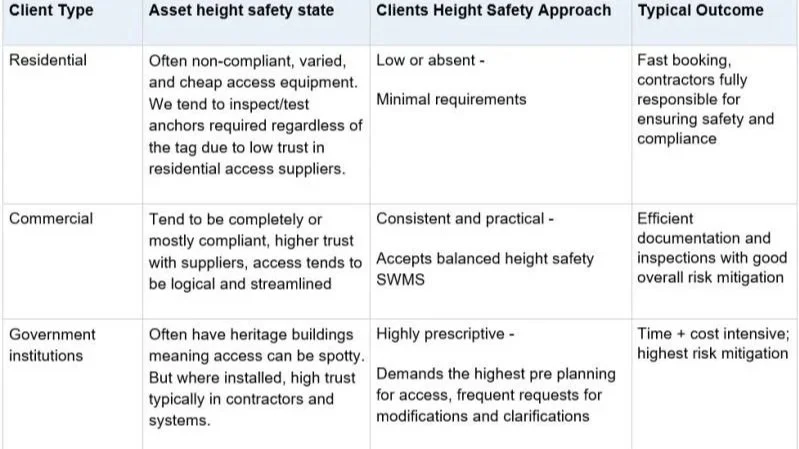
Client Types - Approaches Compared (See table below)
Commercial clients usually deliver the best balance. Residential clients often under-specify. Councils and government institutions processes further limit risk exposure but at the cost of significant time spent documenting.
Our Access Capability
All engineers hold current Working at Heights certification. Most carry Yellow Card for elevated work platforms. Over 40 percent are IRATA qualified, including in-house Level 3 supervisors. This combination lets us reach most inspection points without external contractors beyond BMU drivers. Tough access problems that still need an engineer on site are usually solvable with what we already carry.
Technical Grey Zones
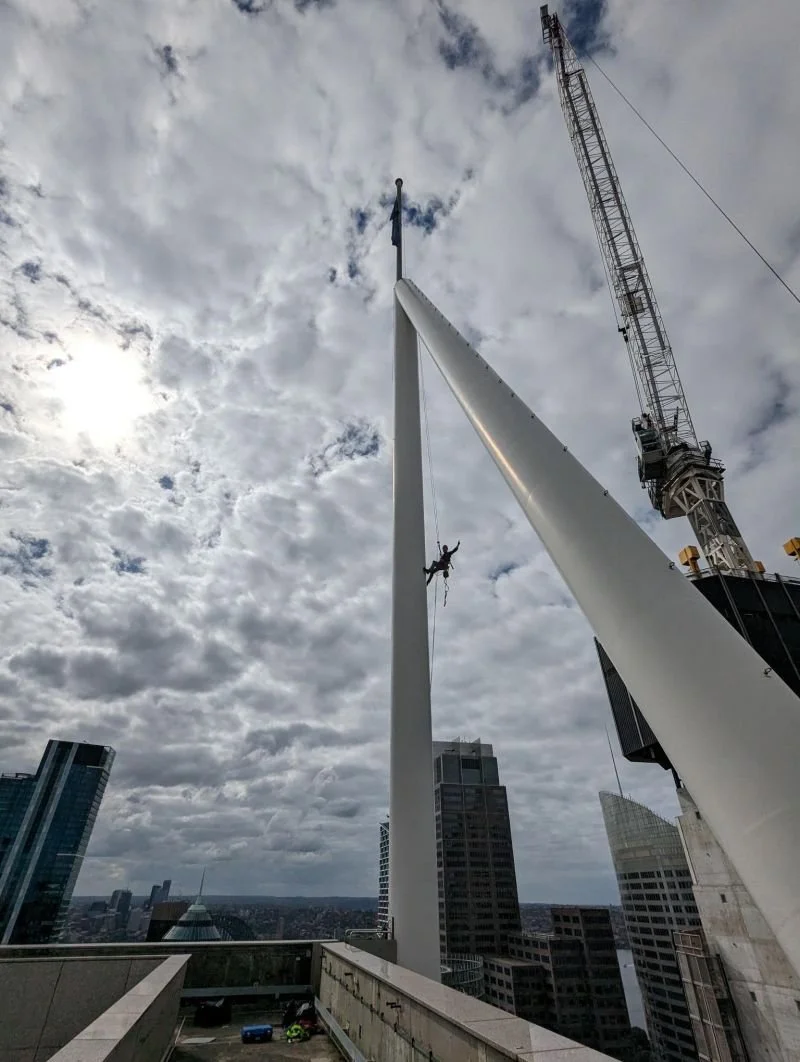
Transitions between fall restraint, fall arrest and rope access create subtle equipment and decision differences. Anchorage adequacy, types of devices and lanyards required, boom lift egress onto roofs, flagpole aid climbs and confined space entry all require on-the-spot engineering judgement. We document the chosen method, load path and residual risk, then advise the client on permanent fixes where gaps exist.
Value Delivered
We specialise in managing compliance gaps safely on the day rather than requiring reinspection. Clients receive the inspection plus clear guidance on what contractors can safely use and what must be upgraded.
Recommendation
When scoping inspection work, ask providers two questions: what percentage of your team holds IRATA or equivalent, and how do you handle non-compliant legacy access systems? The answers reveal real capability and your downstream risk.
If your portfolio includes mixed building stock and you want inspections that are both technically sound and practically efficient, get in touch to discuss your options.
If you’re interested in learning more, please reach out to the Ironbridge Engineering team.