
WUFI assessment for Building Envelopes
by Sara Mattsson | March 26, 2026
WUFI assessment for building envelopes: assessing mould growth and condensation risk to support better design decisions and avoid costly rectification
As building envelopes become more airtight to meet energy efficiency targets, the risk of condensation and mould growth is increasing - often hidden within wall and roof assemblies until costly failures emerge.
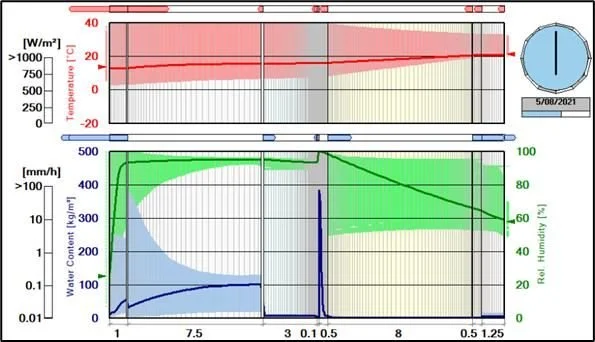
This is where hygrothermal modelling is becoming an essential design tool. WUFI software provides the ability to carry out thousands of calculations to simulate heat and moisture transport through building elements over years or decades. This allows designers to assess condensation risk, drying potential, and mould growth (often using metrics like a mould index threshold). This enables more informed material selection, sequencing, and detailing - well before construction.
With the upcoming NCC 2025, the importance of condensation management is growing. The code builds on NCC 2022 condensation provisions and introduces further refinements, including:
• Enhanced requirements for wall systems (e.g. vapour permeance and drained/ventilated cavities)
• Expanded roof ventilation provisions and refinements (including changes for small roof areas)
• Continued focus on managing internal moisture to reduce health risks and building degradation
These changes reflect a shift: condensation risk is no longer a secondary consideration - it’s a core performance requirement.
In this context, hygrothermal modelling is a compliance pathway - but also a risk management tool. Used early, it can help avoid redesign, defects, and remediation - ultimately supporting more robust, durable, and healthier buildings.
For more information on WUFI assessment for building envelopes, contact the Ironbridge Engineering team.